

There is a certain kind of tired that becomes normal.
The kind that follows you from the morning alarm to the final email of the evening. The kind that makes movement feel like another obligation on an already crowded list.
We believe health should not depend on perfect conditions.
It should meet you inside your real life. Between meetings. After school drop-off. Before dinner. In the small windows where a better version of your day is still possible.
This is where high intensity training becomes interesting.
Not as punishment. Not as a “burn more calories” obsession. Not as another trend promising transformation in two weeks.
But as a precise, intelligent tool for building strength, metabolic health, resilience, confidence, and energy in less time than most people spend scrolling their phone.
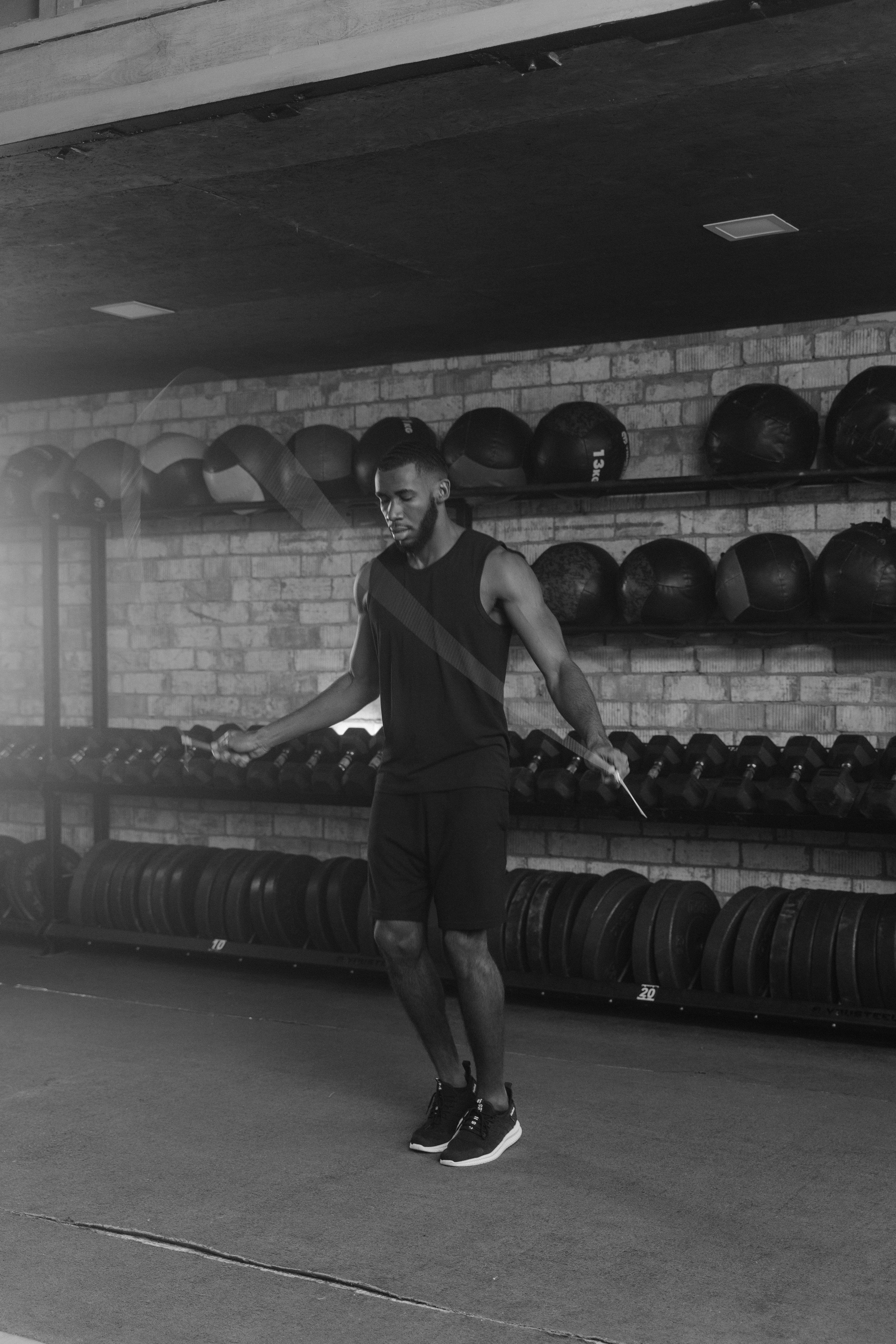

High intensity training is often misunderstood.
For some, it sounds intimidating. For others, it brings to mind loud gyms, extreme workouts, and pushing until exhaustion. But at its best, high intensity training is not chaos. It is not about destroying yourself.
It is about working with focus.
High intensity training means short periods of challenging effort followed by recovery. That effort can come from sprint intervals, cycling, rowing, bodyweight circuits, hill walks, strength movements, or even a fast-paced session using minimal equipment.
The goal is simple: ask the body to adapt.
When we train with intensity, even briefly, we send a powerful signal. Build more strength. Improve oxygen use. Become more efficient with energy. Handle stress better. Recover faster. Stay capable.
For longevity, that signal matters.
Because living longer is not only about adding years. It is about protecting the qualities that make those years feel alive: strength, mobility, independence, vitality, and confidence in your own body.

As we move through our 30s, 40s, and 50s, the conversation around health changes.
It becomes less about appearance and more about capacity.
Can you carry groceries without pain? Climb stairs without feeling breathless? Stay energized after a demanding day? Sleep well? Manage stress? Travel, dance, hike, play, lift, think clearly, and still feel like yourself?
High intensity training supports several pillars that matter deeply for long-term health.
It can help improve cardiovascular fitness, which is one of the strongest markers of physical resilience. It can support insulin sensitivity, helping the body use glucose more effectively. It can preserve and build lean muscle, especially when combined with strength training and nourishing food. It can also improve mental sharpness, mood, and stress tolerance, not because exercise solves everything, but because the body and mind are never separate.
Intensity teaches the nervous system something valuable: you can do hard things, recover, and return stronger.
That lesson travels beyond the workout.
But isn’t high intensity stressful?
Yes. That is the point.
But there is a difference between intentional stress and chronic stress.
Chronic stress is the endless loop: poor sleep, too much work, too little movement, rushed meals, emotional overload, and no real recovery.
Intentional stress is different. It is controlled, brief, and followed by restoration. A cold plunge can be stress. A sauna can be stress. Fasting can be stress. A focused workout can be stress.
The magic is not in the stress alone. It is in the rhythm.
Challenge. Recover. Adapt.
For many high-performing people, the missing piece is not ambition. It is recovery. High intensity training only works when it is paired with sleep, protein, hydration, mobility, nervous system regulation, and enough easy days.
At Naia, we are not interested in turning wellness into another performance trap.
You do not need to suffer to be healthy. You need enough stimulus to grow and enough care to repair.

We believe movement should feel purposeful, not punitive.
That means high intensity training should be scaled to your body, your season of life, and your current capacity.
If you are new to exercise, high intensity might be a brisk uphill walk with short bursts of speed. If you are already active, it might be intervals on a bike, kettlebell circuits, or sprint-style efforts. If you are sleep-deprived, overworked, or recovering from illness, the most intelligent choice might be to reduce intensity and focus on gentle movement instead.
Health is not about doing the hardest thing possible.
It is about doing the right thing consistently.
A good high intensity session should leave you feeling challenged, clear, and alive. Not crushed for the rest of the day.
How hard should “hard” feel?
During the intense interval, you should feel challenged enough that speaking in full sentences becomes difficult. You are focused. Your breathing is elevated. You are working.
But you should still feel in control.
You are not chasing collapse. You are chasing quality.
A useful way to think about it:
Easy means you could continue for a long time.
Moderate means you are working, but steady.
High intensity means you can only sustain the effort briefly.
The better your recovery becomes, the more effective your intensity becomes.
This is why sleep, nutrition, and stress management are not separate from training. They are part of the training.
What to eat around high intensity training
Food is not just fuel. It is information.
If you are doing high intensity training, your body needs the building blocks to adapt. That means enough protein, enough minerals, enough carbohydrates for performance, and enough overall nourishment to recover.
A simple pre-workout option might be Greek yogurt with berries, a banana with nut butter, or sourdough with eggs. After training, focus on protein, colorful plants, healthy fats, and fermented foods that support gut health and digestion.
At Naia, we love simple meals that do not require a wellness degree to prepare: eggs with fermented vegetables, lentil bowls with herbs and olive oil, kefir smoothies, miso soups, roasted vegetables, quality fish, beans, whole grains, and seasonal produce.
The goal is not restriction.
The goal is resilience.
The weekly formula
For a sustainable movement routine, think in layers.
Walk daily when possible. It is simple, underrated, and deeply human.
Strength train two to three times per week. Muscle is one of the most important assets for aging well.
Add high intensity training once or twice per week. Short, focused, and adapted to your level.
Prioritize recovery every day. Sleep, breath, light exposure, hydration, nourishing food, and moments of stillness.
This is not about becoming an athlete.
It is about becoming more alive in your own life.
Start small.
Choose one short session this week.
Warm up. Work with focus. Recover with care.
Then notice how you feel.
Not just in your body, but in your life.
With health and love,
Miral & Adam
Team Naia
🌿 Join us on Instagram on this journey toward better living.
Naia Live | Redefine Health and Longevity.
Zurich, Switzerland 🇨🇭
[Instagram: @live.naia]